
Nearshoring Facilities in Juárez: Available Space & Build-to-Suit
Updated: 23 hours ago
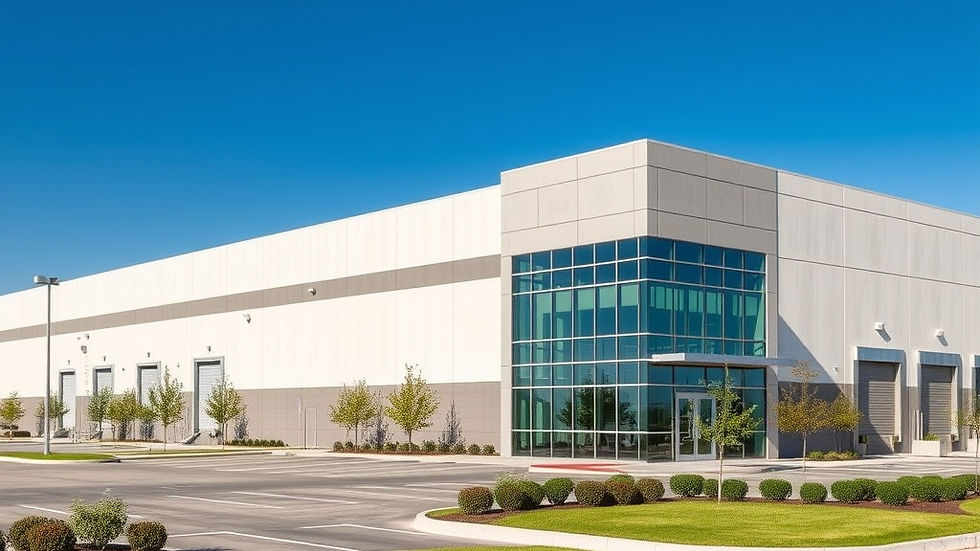
Few cities in Mexico are as closely tied to the nearshoring conversation as Ciudad Juárez. If your company is evaluating nearshoring manufacturing facilities in Juárez, it's worth understanding both why the region has become a top destination and what it actually takes to get a facility up and running there.
Why Juárez Keeps Coming Up in Nearshoring Discussions
Ciudad Juárez has been an export manufacturing hub since the maquiladora program began in the 1960s, and today, a large share of the local economy is tied to maquila operations across automotive, electronics, medical device, and aerospace manufacturing. That decades-long track record means the region already has what a new nearshoring project actually needs on day one:
An established supplier base. Companies moving production to Juárez often find components, packaging, and logistics providers already operating nearby, which shortens ramp-up time considerably compared to a greenfield location with no existing industrial base.
A trained labor pool. Generations of manufacturing employment have built a workforce with direct experience in high-volume production environments, quality systems, and technical maintenance roles.
Direct border access. Four international crossings connect Juárez to El Paso, Texas, keeping finished goods and components moving in hours rather than days — a meaningful advantage when your business case depends on shortening the supply chain, not just relocating it.
Matching Nearshoring Manufacturing Facilities in Juárez to Your Manufacturing Process
Not every industrial building in Juárez is suited to every kind of manufacturing. Before touring space, it helps to define:
Power requirements. Manufacturing operations, especially anything involving injection molding, welding, or heavy equipment, need meaningfully more electrical capacity (measured in kVA) than a pure distribution warehouse.
Clear height and floor loading. Assembly lines and overhead crane systems may require higher clearances or reinforced flooring not present in standard logistics buildings.
Specialized utilities. Some processes require compressed air infrastructure, process water, or specific wastewater handling that not every building can support without a retrofit.
Expansion capacity. If your nearshoring project is the first phase of a larger plan, look for sites — or landlords — with room to grow, whether through additional modules in a multi-tenant park or adjacent land for a build-to-suit expansion.
Build-to-Suit vs. Existing Inventory
Companies evaluating Juárez for a manufacturing facility typically choose between two paths:
Leasing existing inventory — faster to occupy, lower upfront capital commitment, and a good fit if your process can adapt to an available building's specs.
Build-to-suit development — takes longer (typically 9–14 months depending on scope) but lets you specify exact power, layout, and infrastructure requirements, which matters more for complex or highly specialized manufacturing processes.
Many companies start their search across both tracks simultaneously — evaluating currently available industrial properties while also getting a build-to-suit timeline and budget from developers, so they can make an informed decision rather than defaulting to whichever option a single broker happens to represent.
Understanding the Regulatory Framework
Nearshoring manufacturing operations in Mexico typically operate under the IMMEX (maquiladora) program, which allows companies to temporarily import machinery, equipment, and raw materials duty-free, provided the output is exported. This structure is central to why nearshoring in Mexico pencils out financially for many U.S.-bound manufacturers. Full program details are published by Mexico's Secretaría de Economía.
It's also worth understanding the trade framework underpinning cross-border manufacturing between the U.S., Mexico, and Canada — the USMCA — since qualification rules can affect sourcing decisions for components and materials. The official text and related resources are maintained by the Office of the U.S. Trade Representative.
For companies planning frequent cross-border shipments through Juárez specifically, current wait times at the international bridges are published by U.S. Customs and Border Protection — a practical input when comparing crossing points during site selection.

What a Realistic Nearshoring Timeline Looks Like
Companies new to the region often underestimate how much lead time a nearshoring project needs, especially if permitting, utility hookups, or IMMEX registration are involved. A rough, realistic sequence looks like:
Define facility requirements (size, power, layout, timeline).
Tour and shortlist available buildings or build-to-suit sites.
Negotiate lease or development terms.
Complete IMMEX registration and any required environmental or municipal permitting.
Build out tenant improvements and install equipment.
Begin production ramp-up.
Depending on complexity, this can run anywhere from a few months (for a straightforward lease of ready-to-occupy space) to well over a year (for a custom build-to-suit facility with specialized infrastructure).
Start With Local, Current Market Knowledge
Because the details that make or break a nearshoring project — real power availability, actual building condition, true submarket labor depth — rarely show up accurately in a national database, working with a team that's physically active in the Juárez market makes a real difference in avoiding costly surprises after you've already committed.
If you're evaluating nearshoring manufacturing facilities in Juárez, contact NAI Mexico North Central to talk through your process requirements and get a shortlist of buildings—or build-to-suit options—that match what your operation needs.

Comments